


Page 17 - AA 2024
P. 17
Djibouti


                           Serious food insecurity situation due


                        to unprecedented multi-season drought


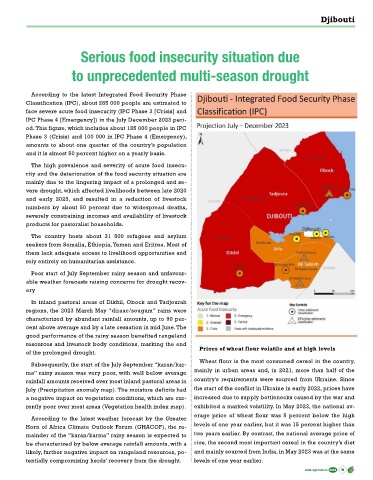
           According to the latest Integrated Food Security Phase
         Classification (IPC), about 285 000 people are estimated to
         face severe acute food insecurity (IPC Phase 3 [Crisis] and
         IPC Phase 4 [Emergency]) in the July December 2023 peri-
         od. This figure, which includes about 185 000 people in IPC
         Phase 3 (Crisis) and 100 000 in IPC Phase 4 (Emergency),
         amounts to about one quarter of the country’s population
         and it is almost 50 percent higher on a yearly basis.
           The high prevalence and severity of acute food insecu-
         rity and the deterioration of the food security situation are
         mainly due to the lingering impact of a prolonged and se-
         vere drought, which affected livelihoods between late 2020
         and  early  2023,  and  resulted in  a  reduction  of  livestock
         numbers by about 50 percent due to widespread deaths,
         severely constraining incomes and availability of livestock
         products for pastoralist households.
           The  country hosts about  31  500 refugees  and  asylum
         seekers from Somalia, Ethiopia, Yemen and Eritrea. Most of
         them lack adequate access to livelihood opportunities and
         rely entirely on humanitarian assistance.

           Poor start of July September rainy season and unfavour-
         able weather forecasts raising concerns for drought recov-
         ery

           In inland pastoral areas of Dikhil, Obock and Tadjourah
         regions, the 2023 March May “diraac/sougum” rains were
         characterized by abundant rainfall amounts, up to 90 per-
         cent above average and by a late cessation in mid June. The
         good performance of the rainy season benefited rangeland
         resources and livestock body conditions, marking the end   Prices of wheat flour volatile and at high levels
         of the prolonged drought.
                                                                 Wheat flour is the most consumed cereal in the country,
           Subsequently, the start of the July September “karan/kar-
         ma” rainy season was very poor, with well below average   mainly in urban areas and, in 2021, more than half of the
         rainfall amounts received over most inland pastoral areas in   country’s requirements were sourced from Ukraine. Since
         July (Precipitation anomaly map). The moisture deficits had   the start of the conflict in Ukraine in early 2022, prices have
         a negative impact on vegetation conditions, which are cur-  increased due to supply bottlenecks caused by the war and
         rently poor over most areas (Vegetation health index map).  exhibited a marked volatility. In May 2023, the national av-
                                                               erage price of wheat flour was 5 percent below the high
           According to the latest weather forecast by the Greater
         Horn of Africa Climate Outlook Forum (GHACOF), the re-  levels of one year earlier, but it was 15 percent higher than
         mainder of the “karan/karma” rainy season is expected to   two years earlier. By contrast, the national average price of
         be characterized by below average rainfall amounts, with a   rice, the second most important cereal in the country’s diet
         likely, further negative impact on rangeland resources, po-  and mainly sourced from India, in May 2023 was at the same
         tentially compromising herds’ recovery from the drought.  levels of one year earlier.
                                                                                                  Arab Agriculture  2024  15

